
Heavy-Duty Top Grid for ZZ300X300 Shredders
Heavy-Duty Top Grid for ZZ300X300 Shredders
20+
16,000 t
19,000 kg
The product catalog, service pages, case studies, and articles are updated as soon as new content is published.
Wear parts, specifications and material options.
Engineering, upgrade, machining and refurbishment services.
Representative projects and condition assessments on operating lines.
Company news and practical notes on wear parts.
Send drawings, machine models and condition details.
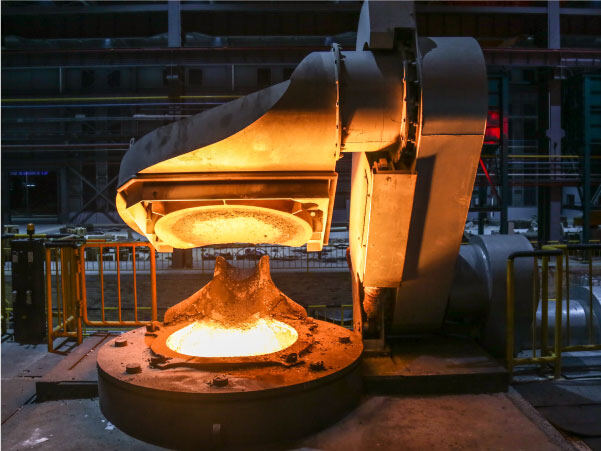
Confidence in wear parts starts with evidence: the chemistry we melt, the heat treatment applied to each batch, the inspections and tests we perform, and the records that link every casting to its production and inspection history.
We can produce parts either to custom specifications or to optimized designs confirmed after evaluating your operating conditions.
Each casting is assigned a unique traceability code that links it to its complete production and inspection records.
Feeding and riser designs are validated by simulation before the first pour to improve casting soundness.
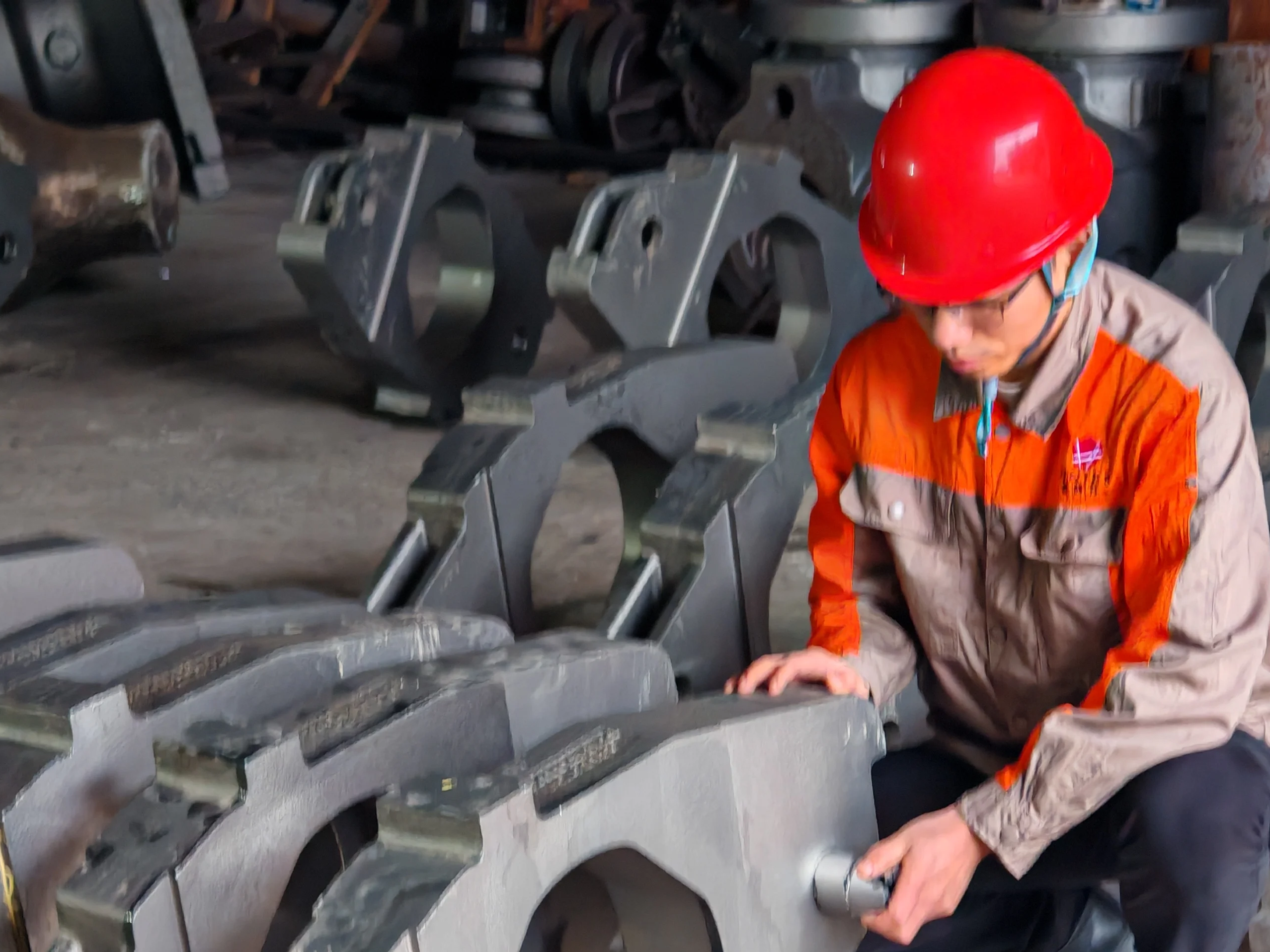
In-house inspection and testing includeing MPI, UT, RT, and dye DPI. Mechanical testing covers tensile, impact, and hardness testing, and metallographic analysis is also performed in-house.
Engineered material formulations are paired with controlled heat-treatment cycles to deliver consistent wear performance.
Hammers, grids, grates, and liners are available for all major shredder makes and models
A selection of wear parts is shown below. Product pages include specifications and available options.
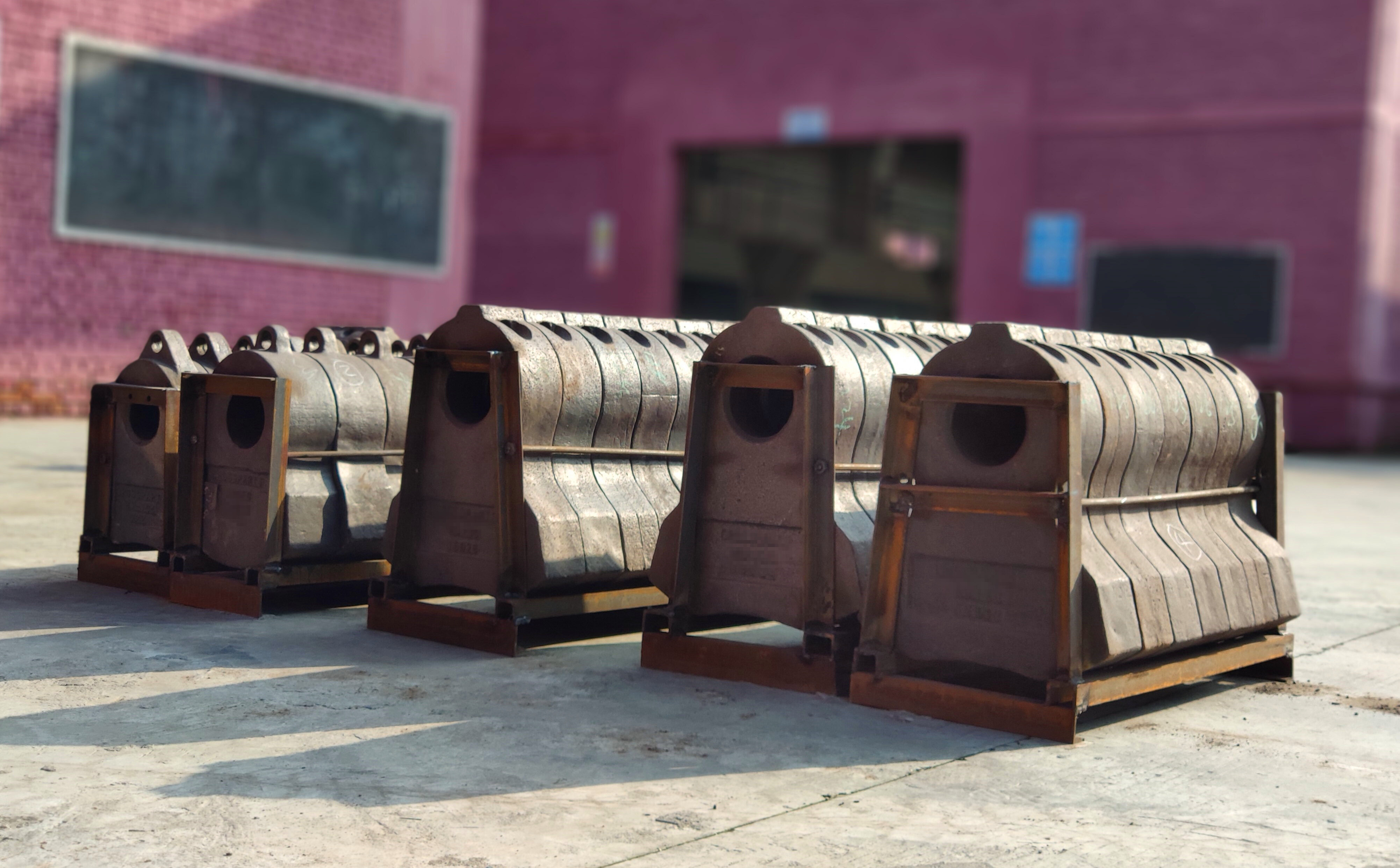
Heavy-Duty Top Grid for ZZ300X300 Shredders

ZZ300X300 HEAVY DUTY SCRAP SHREDDER REJECT DOOR, HIGH MANGANESE STEEL, UNIT WEIGHT 11500KG

Full-specification hammers for mainstream shredder models worldwide, cast and forged in grades selected for the actual feed on your line.

Grids engineered for stable discharge size and higher throughput, with hole size, hole shape and discharge angle set to your circuit.

Cast wear plates in high manganese and alloy steel, plus plates formed from wear-resistant steel plate for liners, walls and chutes.

Rotor protection caps and covers that shield the rotor body from direct wear, supplied as single parts or within assembled rotor sets.
Our service descriptions set out the engineering review, manufacturing scope, and deliverables for each order.

Parts built from your drawing, sample or machine model.

A better material grade for your actual wear conditions.

Grid geometry and part selection matched to your operating condition.

Heavy fabricated and machined parts up to 90,000 kg.
Rotor rebuild and wear package replacement.
Each case study describes the operating conditions, the proposed solution, and the scope of supply.

Hammer grade and profile reviewed for a line running mixed car body and light iron feed.

Hole size, hole shape and discharge angle adjusted to stabilise output sizing on a scrap line.

Matched hammers, grids and rotor caps supplied as one wear package for a non-ferrous circuit.

Rotor inspected, rebuilt and delivered as a complete assembled unit with matched wear parts.
Technical notes and company updates are available in the Articles section.

Discover why hammer pins and rotor caps are critical to scrap shredder reliability. Learn how proper inspection, wear measurement, and timely replacement help prevent rotor damage, reduce unplanned downtime, and extend equipment service life.

Casting simulation with MAGMA enables shredder hammer producers to predict internal shrinkage porosity and inclusion risk before production, especially at the eye and striking body where abrupt section changes create hot spots. Soundness verification, calibrated against ultrasonic or sectioning results, confirms predicted sound regions and establishes documented soundness release criteria. Together, predictive simulation and verified soundness keep defective castings out of service, reducing premature fracture, unplanned shutdowns, and economically significant field failure risk in demanding shredding and recycling operations.

Some operators treat shredder hammers as interchangeable consumables and read efficiency from start-of-cycle throughput. Over a full wear cycle, mass loss and edge rounding raise energy per ton and total cost per ton, so grade selection should follow the line's actual ELV feed mix rather than a catalogue hardness figure. Three evidence criteria are useful in supplier evaluation: traceability, inspection scope and engineering capability.

In end-of-life vehicle (ELV) recycling, grid geometry plays a critical role in determining downstream sorting efficiency. This field-tuning case examines how screen aperture, grid spacing, and material flow affect the separation of shredded vehicle residues.

Grid aperture and discharge angle set both fragment size and how well the downstream sorters perform. A field adjustment on a 45–50 t/h ELV line raised non-ferrous purity from 82% to 94% and cut eddy current rejection from 18% to 6%, with throughput loss under 5%.

Forged hammers are now supplied alongside cast grades, giving operators another option where impact loading is severe.

Hammer life depends on matching the material grade to impact energy and abrasive wear. A practical reference for choosing between ultra-high-strength high-manganese steel and high-strength low-alloy steel by feed composition and machine capacity.

Magnetic particle, ultrasonic, X-ray and dye penetrant inspection are all performed in house, alongside tensile, impact and hardness testing.
Wear behavior varies with line configuration and process conditions. Select the application closest to your operating profile to view the recommended parts and the operating conditions for which they are designed.
We manufacture wear parts for shredders and work with plant operators to match those parts to the conditions under which they operate. GOLDSTONE, KINTES, and 金铁石 are registered trademarks of Sichuan KINTES Technology Co., Ltd.
Melting, heat treatment, molding, shot blasting, and machining are all covered by a single, traceable production record.
Our engineers work with you to review your equipment and operating conditions, then recommend design changes to help extend part life.
Tell us the shredder model, the feed material, and the part you need. We confirm geometry, material grade, and lead time before production begins.
Drag drawings, photos or specifications here, or choose files. Up to 3 files, 10 MB each. JPG, PNG, WebP, PDF, DWG, DXF and STEP are accepted.


